What Licenses and Permissions Are Required to Open a Play School or Daycare? (Step-by-Step Guide)
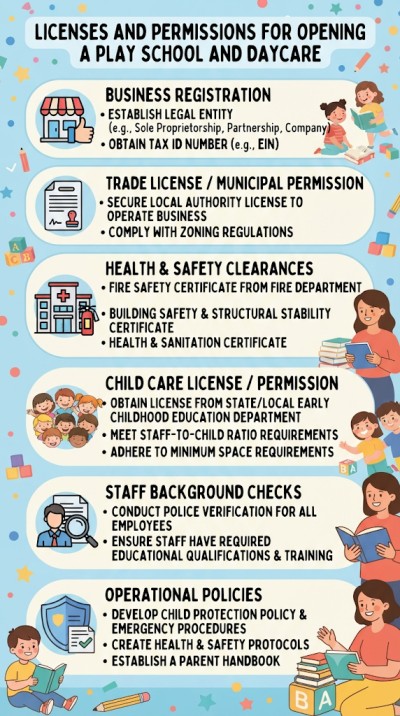
Opening a play school or daycare in India requires multiple licenses across three levels—business registration, municipal clearances, and child-safety compliance. The core requirements include a trade license, fire safety NOC, health and sanitation clearance, Women and Child Development (WCD) registration where applicable, state ECCE registration where notified, and POCSO-compliant staff verification.
There is no single “play school license” in India. Preschools are regulated at the state and municipal level, and the exact list of permissions changes by city and state. A play school in Mumbai needs different clearances than one in Indore, Patna, or Jaipur.
Why There Is No Single “Play School License” in India
State and municipal control explained
Preschools in India are regulated at the state level. There is no single central licence. The typical minimum documentation includes business registration, a Shops and Establishment or trade licence from the local municipality, building safety and fire NOC, health and sanitation NOC, and state ECCE registration if your state has notified an ECCE regulator.
Some states have moved faster than others. Maharashtra has mandatory registration of pre-primary schools and play groups through its preschool registration portal, following an April 2025 circular. Gurgaon’s WCDD requires all playschools to register on the Saral portal and meet criteria including building documentation, a designated play area, fire safety, CCTV, appropriate toilets, and a staffing ratio of one teacher and one caretaker per 20 children.
Punjab made registration mandatory for playway schools in December 2024, with a ₹5,000 fee and three-year validity. Schools operating in a single room were ordered to close.
What happens if you operate without registration
Gurgaon’s WCDD was preparing to shut down more than 700 playschools operating without official registration in August 2025. Many functioned from cramped residential buildings without fire safety systems, CCTV, child-friendly toilets, or qualified staff—yet charged ₹3,000–₹5,000 per month.
The message is simple: unregistered operation is not a sustainable business model. It is a shutdown notice waiting to happen.
Why this matters to you: If you are planning a play school in a Tier-2 city, registering early protects your investment. A single closure notice can wipe out your rent deposit and staff costs.
The Complete License and Permission Checklist for Play Schools and Daycares
The table below gives an overview of the ten core requirements, followed by detailed explanations for each.
| Requirement | Authority | Why It Matters |
|---|---|---|
| Business Entity Registration | MCA / Registrar of Firms / Local authority | Legal identity for contracts, leases, and taxes |
| Trade License / Shops & Establishment | Municipal Corporation | Permission to operate commercially in the premises |
| Fire Safety NOC | State Fire Department | Child evacuation and fire prevention compliance |
| Health and Sanitation Clearance | Municipal Health Department | Hygiene, drinking water, and sanitation standards |
| Building Safety Certificate | Structural Engineer / Municipal Authority | Structural fitness of the building |
| WCD Registration | Women and Child Development Department | Child safety and staffing norms |
| State ECCE Registration | State Education / ECCE Authority | Curriculum and age-appropriate practice norms |
| POCSO Compliance | Internal + Police Verification | Staff background checks and child protection policy |
| Food Safety Registration | FSSAI | If serving meals or snacks on premises |
| GST Registration | GST Department | If turnover crosses ₹20 lakh threshold |
1. Business Entity Registration
Before you apply for any licence, you need a legal business identity. You can register as a sole proprietorship, partnership, LLP, private limited company, or Section 8 company. The choice affects liability, taxation, and the documents you will need for other approvals.
Most small play schools start as proprietorships or partnerships. Franchise models often require a private limited company or LLP. Register your entity first—most municipal applications will ask for your registration proof.
Why this matters to you: Without a registered entity, you cannot sign a commercial lease, open a current account, or apply for a trade license in most municipalities.
2. Trade License / Shops and Establishment Registration
The trade license is the municipal permission to operate a commercial establishment at your premises. It is issued by the local municipal corporation. In Delhi, this is the MCD trade/establishment clearance. In Mumbai, it is the BMC trade and health licence.
Separately, Shops and Establishment registration governs working hours, staff records, and local minimum wages. In Maharashtra, this is the Gumasta registration under the Maharashtra Shops and Establishments Act.
Do not confuse the two. The trade license allows the business to exist at that location. The Shops and Establishment registration governs how you employ people there.
Why this matters to you: A missing trade license is one of the easiest grounds for a municipal seal-and-shut order. It is also one of the first documents parents and franchisors ask for.
3. Fire Safety NOC
A Fire No Objection Certificate is mandatory for educational institutions and commercial establishments. It is issued by the state fire department after inspecting your premises for fire prevention systems, evacuation routes, and equipment.
For upper-floor or vertical premises—common in Mumbai and other dense cities—the fire NOC is especially critical. The e-NagarSewa form in Uttar Pradesh asks for a fire NOC as part of the trade licence application, so secure the fire NOC first.
Fire safety requirements typically include extinguishers, marked exits, emergency lighting, and in some states CCTV and alarm systems. Goa’s fire authority explicitly requires trade and occupancy licences to verify the validity of the Fire Safety NOC before renewal.
Why this matters to you: Fire safety is non-negotiable for a building full of small children. A missing or expired NOC can shut your school down immediately.
4. Health and Sanitation Clearance
The municipal health department issues a health and sanitation NOC covering drinking water safety, toilet hygiene, waste disposal, and general sanitation. This is particularly important if your centre serves food or snacks.
In Mumbai, the BMC’s health department clearance is relevant for spaces serving food. In Delhi, health/sanitation clearance depends on premises size and floor. The exact scope varies by city, but the principle is universal: children’s environments must meet basic hygiene standards.
Why this matters to you: Parents inspect toilets and kitchens during admission visits. A health clearance is both a legal requirement and a trust signal.
5. Building Safety / Structural Certificate
A structural or building safety certificate confirms that the premises are safe for occupancy. It is typically issued by a licensed structural engineer or the municipal building department.
In Uttar Pradesh, the e-NagarSewa trade licence application requires a building safety certificate. In Delhi, building/usage compliance is part of the municipal trade clearance. For older buildings, a fresh structural assessment may be required.
Why this matters to you: A structural failure in a play school is a catastrophic risk. A safety certificate protects children and protects you legally.
6. Women and Child Development (WCD) Registration
Several states now require play schools and daycares to register with the Women and Child Development department. Delhi operates a registration route for crèches and play schools, generally on a self-declaration basis covering safety, staffing, and child-protection norms.
Gurgaon’s WCDD requires registration on the Saral portal with criteria including proper building documentation, a designated play area, fire safety, CCTV, appropriate toilets, and a staffing ratio of one teacher and one caretaker per 20 children. Himachal Pradesh’s Solan district has also directed crèches, play schools, daycares, kindergartens, nursery schools, and balwadis to obtain WCD approval.
Why this matters to you: WCD registration is becoming the primary child-safety compliance route in many states. If your state has notified it, treat it as mandatory, not optional.
7. State ECCE Registration (Where Notified)
Some states have notified an ECCE regulator or registration scheme. Maharashtra has moved to mandatory registration of pre-primary schools and play groups through its preschool registration portal, per the April 2025 circular. Karnataka has also notified an ECCE regulator.
Where an ECCE registration scheme exists, it typically covers curriculum norms, child-to-teacher ratios, and periodic renewal. Maharashtra’s draft ECCE framework proposes a 20:1 child-to-teacher norm and a ban on entrance tests for young children.
Why this matters to you: If your state has an ECCE portal, register through it before you start admissions. It is the clearest signal that your curriculum and staffing meet state expectations.
8. POCSO Compliance and Staff Verification
The POCSO Rules, 2020 impose three specific obligations on any institution in regular contact with children. Periodic police verification and background checks of every employee who comes into contact with children. Regular staff training on child safety and abuse prevention. A written Child Protection Policy built on zero tolerance.
This covers not just teachers but helpers, drivers, kitchen staff, and security personnel. Delhi has directed schools to carry out background verification of all personnel who interact with students, including contractual workers and support employees, and to obtain affidavits declaring no history of offences against children or violent crimes.
Failure to report a known or suspected offence carries criminal liability under Section 21 of the POCSO Act—imprisonment up to one year plus fine for a person in charge of an institution.
Why this matters to you: POCSO compliance is not paperwork. It is personal legal risk for the owner or principal. Police verification and a written child protection policy are your first line of defence.
9. Food Safety Registration (If Serving Food)
If your play school or daycare serves meals, snacks, or milk, you need FSSAI registration or licensing. The category depends on your turnover and the scale of food handling.
Basic FSSAI registration is sufficient for small centres. A full licence is required for larger operations. The municipal health clearance and FSSAI registration are separate requirements, though they overlap on hygiene standards.
Why this matters to you: Food-related illness in a daycare can destroy trust overnight. FSSAI registration signals that your kitchen meets basic safety standards.
10. GST Registration (If Turnover Crosses Threshold)
GST registration is required once your annual turnover crosses the threshold—₹20 lakh for most states, and ₹10 lakh for special category states. Below that threshold, registration is optional but may still be useful for input tax credits.
Preschool education services may be exempt in some cases, but the exemption depends on the nature of the service and the entity structure. Consult a chartered accountant before assuming exemption.
Why this matters to you: GST non-compliance can trigger notices and penalties. Registering at the right time avoids last-minute scrambling when your centre grows.
State-by-State Examples: Delhi, Mumbai, Gurgaon, Punjab
The exact permission list changes by state and city. The table below shows how four major markets differ. This is a comparison to help you plan—not a substitute for verifying with your local authority.
| City / State | Key Permissions | Notable Detail |
|---|---|---|
| Delhi | MCD trade license, WCD play-school registration, Fire NOC, health/sanitation clearance, Shops & Establishment | WCD registration is generally on a self-declaration basis covering safety and staffing |
| Mumbai (Maharashtra) | BMC trade & health licence, Maharashtra preschool registration, Fire NOC, Gumasta, POCSO compliance | Mandatory preschool registration via state portal per April 2025 circular |
| Gurgaon (Haryana) | WCDD registration on Saral portal, building documentation, fire safety, CCTV, staffing ratio 1:20 | 700+ unregistered playschools faced shutdown in 2025 |
| Punjab | Registration with Department of Social Security, Women and Child Development | ₹5,000 fee, 3-year validity; single-room playway schools ordered to close |
What changes across states
The common thread is municipal trade licensing, fire safety, health clearance, and some form of WCD or ECCE registration. The variation is in which department owns child-safety registration, whether it is self-declaration or inspection-based, and how strictly staffing ratios are enforced.
In Tier-2 cities like Indore, Patna, and Jaipur, enforcement is tightening. States that previously had no play school registration scheme are now notifying rules. Starting with the full checklist—even if your city currently asks for fewer documents—protects you when rules change.
Why this matters to you: A licence set that works in Mumbai may not be sufficient in Gurgaon. Always verify with your local municipal office and WCD department before signing a lease.
Estimated Cost of Licenses and Permissions in India
Licensing and registration costs are a small fraction of total setup investment, but they must be budgeted early. For a small-to-mid play school or daycare, the indicative range is below. These are industry estimates as of 2026; government fees vary by state and premises size.
| Permission / License | Estimated Cost (₹) | Renewal Frequency |
|---|---|---|
| Business entity registration | ₹2,000 – ₹10,000 | One-time (compliance ongoing) |
| Trade license / Shops & Establishment | ₹3,000 – ₹15,000 | Annual |
| Fire Safety NOC | ₹5,000 – ₹20,000 | Annual or as specified |
| Health and sanitation clearance | ₹2,000 – ₹8,000 | Annual |
| Building safety certificate | ₹5,000 – ₹15,000 | Every few years |
| WCD / state ECCE registration | ₹5,000 – ₹15,000 | 3 years (varies) |
| POCSO compliance (verification + training) | ₹2,000 – ₹10,000 | Ongoing / annual |
| FSSAI registration (if food served) | ₹2,000 – ₹5,000 | 1–5 years depending on category |
| Total indicative range | ₹26,000 – ₹98,000 | — |
Why this matters to you: Budgeting ₹50,000–₹1 lakh for licensing and registration is realistic for most independent play schools. Under-budgeting here delays your opening date.
Play School and Daycare License Checklist: Tick Every Box Before You Open
Use this checklist to track your progress. Tick each item only when you have the actual document in hand—not an application receipt.
- ☐ Business entity registered (proprietorship / partnership / LLP / Pvt Ltd / Section 8)
- ☐ PAN and current account in business name
- ☐ Commercial lease agreement or ownership proof for premises
- ☐ Municipal trade license application submitted or approved
- ☐ Shops and Establishment registration completed
- ☐ Fire Safety NOC obtained from state fire department
- ☐ Health and sanitation clearance from municipal health department
- ☐ Building safety / structural certificate obtained
- ☐ WCD registration completed (if applicable in your state)
- ☐ State ECCE registration completed (if portal exists)
- ☐ Police verification completed for all staff, including helpers and drivers
- ☐ Affidavits from staff declaring no history of offences against children
- ☐ Written Child Protection Policy aligned with POCSO
- ☐ CCTV installed with recording and storage
- ☐ FSSAI registration obtained (if serving food)
- ☐ GST registration completed (if turnover threshold crossed)
- ☐ Child-to-teacher ratio meets state or WCD norms
- ☐ Fire extinguishers installed and serviced
- ☐ Child-safe toilets and drinking water facility verified
Common Mistakes New Owners Make With Play School Licensing
Mistake 1: Signing a residential lease for a commercial play school. Many municipal trade licenses require commercial use of the premises. A residential flat may not qualify. Check land use before you sign.
Mistake 2: Applying for a trade license before the fire NOC. In several states, the trade license application asks for the fire NOC first. Sequence your applications correctly to avoid rejection.
Mistake 3: Verifying teachers but skipping support staff. POCSO compliance covers everyone who comes into contact with children—drivers, kitchen staff, helpers, and security. Partial verification is a compliance gap.
Mistake 4: Treating WCD registration as optional. In Gurgaon, 700+ playschools faced shutdown for operating without WCDD registration. If your state has a registration route, use it.
Mistake 5: Assuming one state’s checklist applies everywhere. Delhi, Mumbai, Gurgaon, and Punjab each have different requirements. Verify locally before you commit to a premises.
Why this matters to you: Most licensing delays are not caused by missing documents. They are caused by applying in the wrong order or assuming a rule does not apply to you.
How IECEA Membership Supports Compliance and Quality
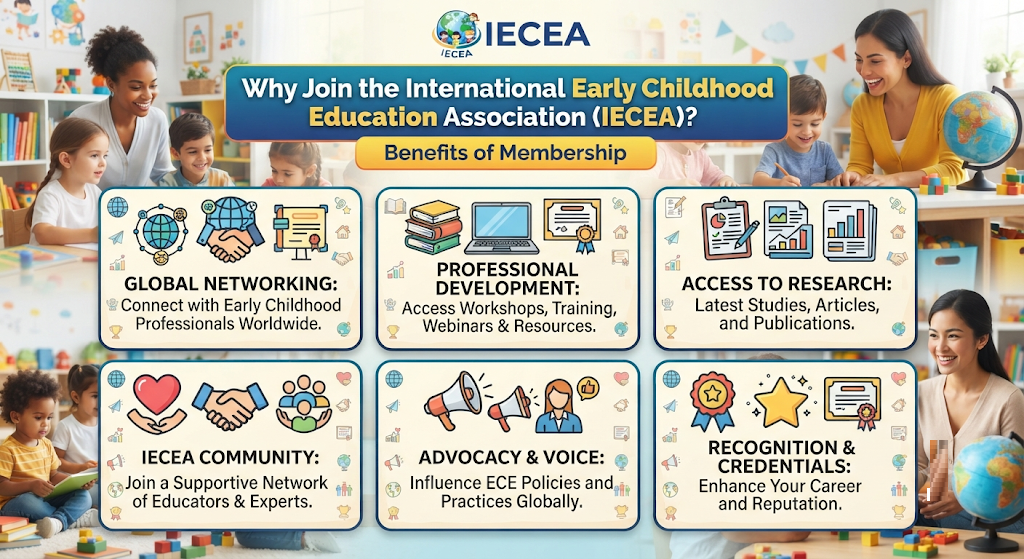
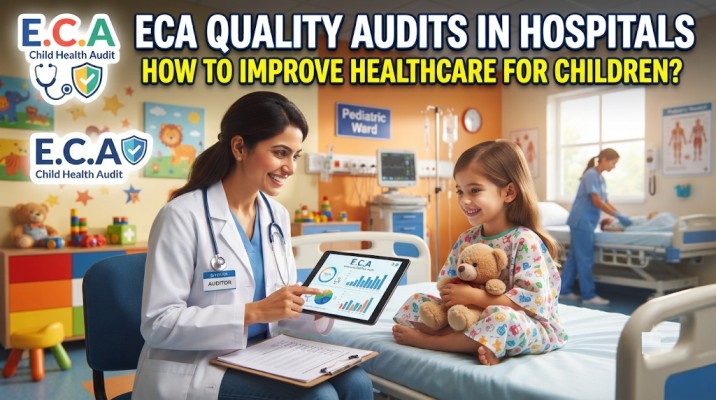
Licensing gets you legally open. Quality keeps you open. IECEA supports both through its E.C.A Quality Audits for play schools, NTT centres, and training institutes, and through structured teacher training and child rights programs.
An IECEA quality audit reviews the same areas that matter for compliance—child safety, staff competency, infrastructure, and parent communication—and gives you a written gap report. For a new play school owner, this is a practical way to prepare for inspections and build parent trust from day one.
Why this matters to you: A licence on the wall is a minimum. An external quality audit and association membership signal that your centre is serious about child safety, not just paperwork.
Open Your Play School the Right Way—Licensed, Safe, and Quality-Ready
Licensing a play school or daycare in India is a multi-department process, not a single application. Start with your business entity and commercial lease. Then sequence fire NOC, trade license, health clearance, WCD or ECCE registration, and POCSO compliance. Document everything in one file.
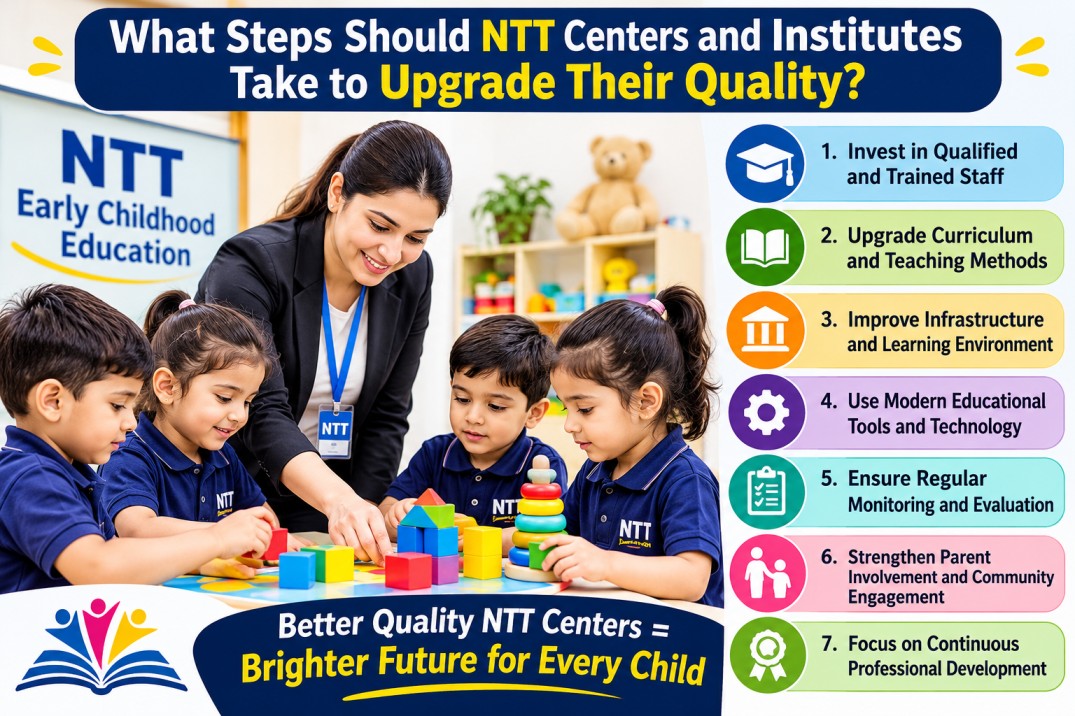
If you are planning a play school or daycare and want support with child-safety standards and quality readiness, explore the E.C.A Quality Audit and IECEA membership options at International Early Childhood Education. You can also see how structured NTT centre quality upgrades align with broader compliance expectations.
Take the first step: Download the checklist above, call your local municipal office and WCD department this week, and confirm the exact document list for your city. Opening legally is the foundation—opening with quality is what makes parents choose you.