How to Support the Mental and Physical Growth of Children Aged 0–5
Supporting mental and physical growth in children aged 0–5 means getting five basics right: responsive caregiving, age‑appropriate nutrition, daily movement and play, consistent sleep routines, and early screening for developmental delays. In India, this is no longer just a parenting choice—it is backed by national frameworks like Navchetna (birth to 3 years) and Aadharshila (3–6 years), launched under NEP 2020.
This guide is for parents in Mumbai, Indore, Patna, Jaipur, and every Tier‑2 and Tier‑3 city in between. No jargon. No guilt. Just the actions that matter.
Why the First Five Years Decide the Next Fifty
Brain development is fastest before age five. The Indian Academy of Pediatrics (IAP) states plainly: brain development stops approximately at 5 years of age[reference:0]. What happens in these years—nutrition, stimulation, safety, and emotional security—shapes the foundation for learning, behaviour, and health later in life.
Brain development: what the science says
A child’s brain forms more than a million neural connections every second in the early years. These connections are strengthened by responsive interactions—talking, singing, playing, and comforting. Chronic stress, inconsistent caregiving, or neglect during this window can weaken the architecture of the developing brain[reference:1].
Why this matters to you: You do not need expensive toys or a “genius” programme. You need consistent, warm, and responsive daily interactions. That is the single highest‑return investment in your child’s future.
India’s policy shift: Navchetna and Aadharshila
The Ministry of Women and Child Development launched Navchetna—a national framework for early childhood stimulation for children from birth to three years—in March 2024. Alongside it, Aadharshila provides a national curriculum for children aged 3–6 years, aligned with the National Curriculum Framework for Foundational Stage (NCF‑FS) 2022[reference:2].
These frameworks signal a shift: early childhood is not just “babysitting.” It is structured, play‑based stimulation that supports cognitive, social, emotional, and physical growth.
Why this matters to you: When you evaluate a daycare or crèche, ask whether its curriculum draws from Navchetna or Aadharshila. A centre that follows a recognised framework is more likely to deliver structured, age‑appropriate stimulation.
Physical Growth: Nutrition, Movement, and Sleep (0–5)
Physical growth is measurable and visible—but it is built on invisible daily habits. Three pillars matter: what your child eats, how much they move, and how well they sleep.
Feeding milestones from 0 to 5
| Age | Feeding recommendation | Source / note |
|---|---|---|
| 0–6 months | Exclusive breastfeeding | WHO and UNICEF recommendation; IAP reinforces early initiation[reference:3] |
| 6–8 months | Continue breastfeeding + at least 2 complementary feeds per day | Indian guidelines[reference:4] |
| 9–24 months | Continue breastfeeding + at least 3 complementary feeds per day | Indian guidelines; breastfeeding up to 2 years and beyond[reference:5] |
| 2–5 years | Family meals, diverse home‑cooked food, limited ultra‑processed and sugary foods | WHO 2023 complementary feeding guidelines; IAP 2026 action plan[reference:6] |
India faces a persistent nutrition gap. NFHS‑5 data shows that 32.1% of children under five are underweight, 35.5% are stunted, and 19.3% are wasted[reference:7]. UNICEF India reports that nearly 70% of children under five are anaemic, and only 11% receive a minimum acceptable diet[reference:8].
Why this matters to you: A “healthy” diet in India is not about expensive supplements. It is about iron‑rich foods (mashed dal, green leafy vegetables), vitamin A, zinc, and diverse home‑cooked meals. If your child is a picky eater, focus on variety and repeated exposure, not force‑feeding.
Movement and outdoor play in Indian cities
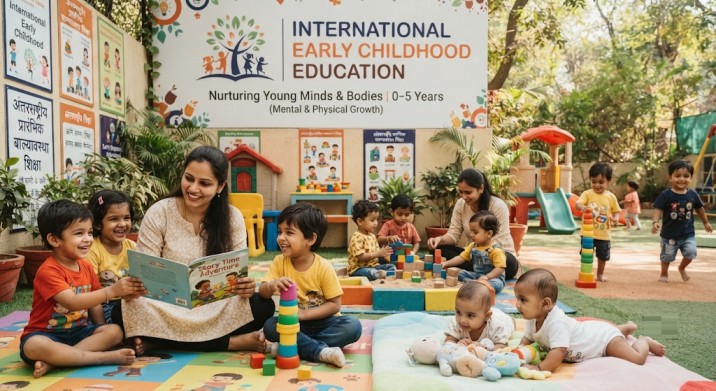
Children under five need daily physical activity—tummy time for infants, crawling and cruising for toddlers, running and climbing for pre‑schoolers. In dense Indian cities, safe outdoor space is scarce. A 2025 report on ten Indian cities highlighted neighbourhood‑level interventions—micro‑parks, sensory play spaces, and safer footpaths—as critical for early childhood wellbeing.
If outdoor space is limited, create movement indoors: obstacle courses with cushions, dancing to music, and throwing‑catching games. The goal is at least 3 hours of active play per day for children aged 1–5 (industry estimate based on WHO physical activity guidance).
Why this matters to you: Movement is not just physical—it builds balance, coordination, and confidence. A child who moves daily sleeps better and regulates emotions more easily.
Sleep: the invisible growth driver
Growth hormone is released during deep sleep. Children aged 1–2 need 11–14 hours of sleep per 24 hours (including naps); children aged 3–5 need 10–13 hours (source: American Academy of Sleep Medicine, widely adopted in Indian pediatric practice).
In Indian households, late bedtimes are common. A consistent routine—bath, story, lights out at the same time—matters more than the exact hour. For toddlers, one midday nap is typical until about age 3–4.
Why this matters to you: Sleep deprivation in young children shows up as irritability, clinginess, and meltdowns—not just “tiredness.” Protecting sleep is protecting growth.
Mental and Emotional Growth: What Parents Often Miss
Mental growth in early childhood is not about flashcards. It is about emotional security, language exposure, and the feeling of being seen. India is waking up to this—but the gap is still large.
Responsive caregiving beats fancy toys
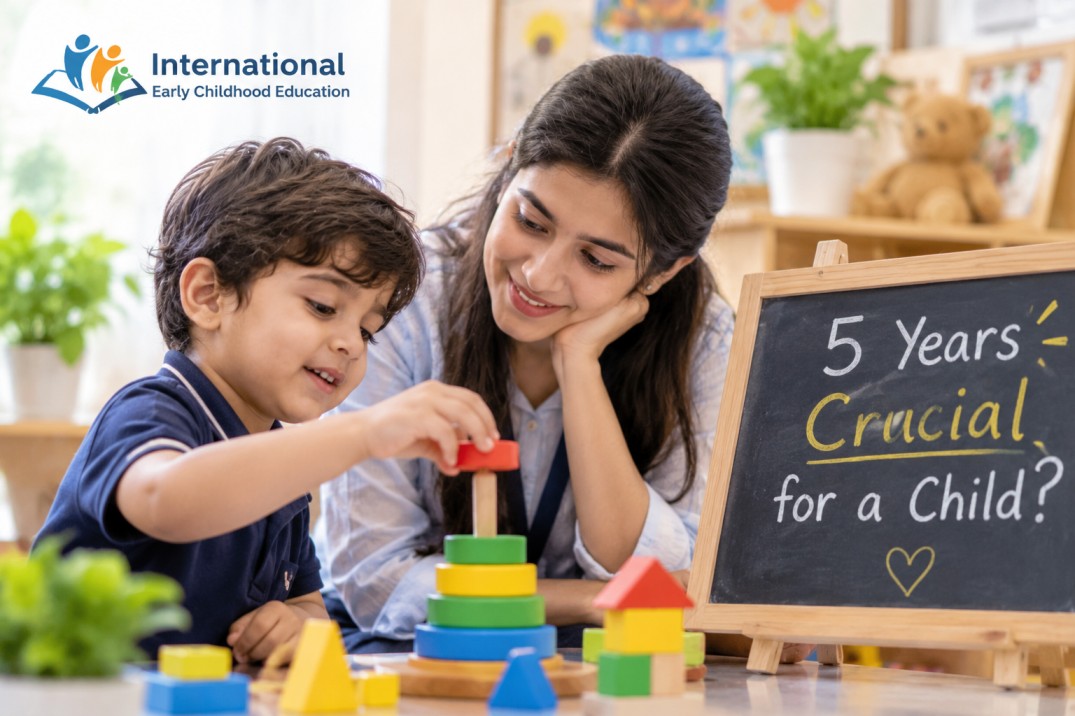
Responsive caregiving means noticing your child’s signals and responding consistently. When a toddler points at a dog, you say, “Yes, a dog! Woof woof.” When a baby cries, you comfort. These small loops build language, trust, and emotional regulation[reference:10].
Why this matters to you: A ₹5,000 electronic toy cannot replace a five‑minute conversation. Your voice, your face, and your attention are the most powerful developmental tools you own.
The rising mental health concern among young children
Emerging data from India shows emotional and behavioural difficulties surfacing in children as young as one to ten years old. School‑based research suggests up to 23% of children may experience symptoms of anxiety or other behavioural concerns[reference:11]. AIIMS experts warn that over half of adult mental‑health disorders begin before age 14—and India’s treatment gap for children is a staggering 80–90%[reference:12].
In young children, distress rarely looks like “anxiety.” It looks like irritability, withdrawal, sleep regressions, or sudden changes in eating. These signs are easily dismissed as “acting out”[reference:13].
Why this matters to you: You are your child’s first mental‑health observer. If something feels persistently “off”—not just a bad day—raise it with your pediatrician. Early support works.
Screen time and emotional regulation
Urban Indian children face reduced playtime and prolonged screen exposure. Sedentary behaviour has replaced open‑ended, imaginative play—a shift linked to poorer emotional and developmental outcomes[reference:14].
The practical rule for 0–5: no screen time before 18–24 months, and after that, co‑viewing with a caregiver, limited to short, high‑quality content. A screen cannot replace a lap, a story, or a conversation.
Why this matters to you: Screen time is not “neutral.” Every hour on a screen is an hour not spent on movement, sleep, or face‑to‑face interaction. Treat it as a trade‑off, not a free activity.
Developmental Milestones 0–5: A Simple Tracker
Milestones are not a race. They are checkpoints. The Indian Academy of Pediatrics recommends developmental screening using standard tools at 9, 18, 24, and 36 months[reference:15].
Red flags at key ages
| Age | What most children do | Red flag to discuss with a pediatrician |
|---|---|---|
| 2 months | Social smile; head control beginning | No response to sound; not smiling at people[reference:16] |
| 4 months | Good head control; reaches for toys | Persistent head lag; no reaching |
| 9 months | Sits without support; responds to name | Does not bear weight on legs; no babbling |
| 18 months | Walks independently; says several words | No pointing; no single words; loss of skills |
| 24 months | Runs; two‑word phrases; parallel play | No two‑word phrases; does not follow simple instructions |
| 36 months | Speaks in sentences; plays with peers | Speech unclear to strangers; extreme difficulty with separation |
Source: Adapted from IAP developmental surveillance guidance and WHO milestones; red flags are indicative, not diagnostic[reference:17].
When to see a pediatrician
See a pediatrician if your child loses a skill they previously had, does not respond to sound or name, has no words by 16 months, or has no two‑word phrases by 24 months. Early intervention can prevent a delay from becoming a disability[reference:18].
Why this matters to you: You know your child best. If something feels persistently different, get a professional opinion. Early screening is not overreacting—it is responsible parenting.
The 7‑Point Daily Checklist for Holistic Growth
Use this checklist daily. It is not about perfection—it is about consistency.
Nutrition checklist
- ☐ Did my child eat at least one iron‑rich food today (dal, green leafy vegetables, fortified cereal)?
- ☐ Did my child drink clean water and, if under 2, continue breastfeeding?
- ☐ Did I limit ultra‑processed snacks and sugary drinks to near zero?
Play and interaction checklist
- ☐ Did we have at least 20 minutes of screen‑free, face‑to‑face play?
- ☐ Did I talk, sing, or read to my child today?
- ☐ Did my child move actively for at least 3 hours (toddlers and pre‑schoolers)?
Safety and routine checklist
- ☐ Did my child sleep at roughly the same time as yesterday, with a consistent wind‑down routine?
Why this matters to you: Seven small checks, done most days, outperform one grand “developmental programme” done occasionally. Consistency is the active ingredient.
How Daycares and Crèches Can Support (or Undermine) Growth
For working parents, a daycare or crèche is a second environment where growth happens—or does not. India’s childcare market is growing, but quality is uneven. Only 9% of pre‑primary schools have a dedicated ECE teacher, and in Anganwadis, the average child‑to‑teacher ratio is 33:1, far above the recommended 20:1[reference:19].
What to ask a childcare centre
- Does your curriculum draw from Navchetna (0–3) or Aadharshila (3–6)?
- What is the caregiver‑to‑child ratio in my child’s age group?
- How do you support language and emotional regulation during the day?
- What is your daily routine for meals, naps, and outdoor/movement time?
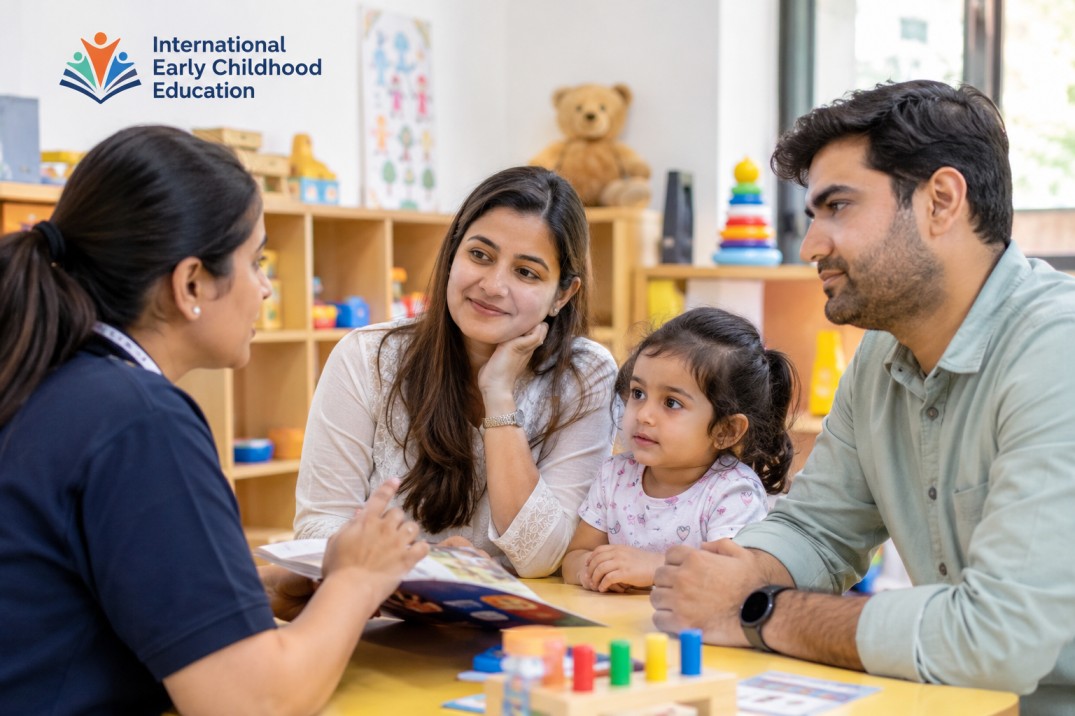
- How do you communicate developmental observations to parents?
Red flags in a “holistic” daycare claim
- No written curriculum or daily schedule. “Holistic” is a marketing word unless it is backed by a plan.
- Ratio above 1:8 in toddler rooms. A caregiver stretched across too many children cannot provide responsive care.
- No parent communication system. If you do not know how your child’s day went, the centre is not supporting your understanding of their growth.
Why this matters to you: A daycare that follows a recognised framework, maintains low ratios, and communicates daily is not just “safe”—it is actively supporting the same growth goals you have at home.