Future Skills and Foundational Years: What Children Need to Learn by 2027
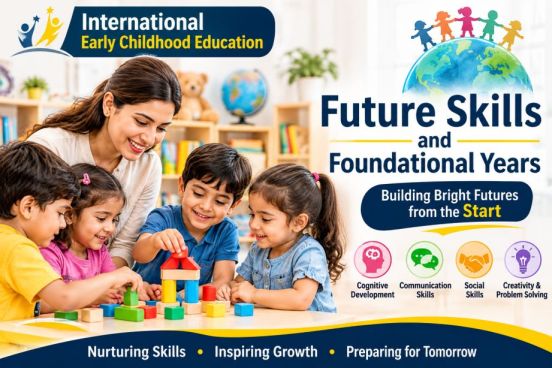
By 2027, children need a mix of foundational literacy, numeracy, socio-emotional skills, critical thinking, creativity, digital safety and adaptive learning. In the foundational years, ages 3–8, play-based learning and strong parent-teacher habits matter more than early rote memorisation.
This guide is for Indian parents, preschools and early childhood educators who want practical answers, not jargon. It connects global future-skills research with India’s NEP 2020 foundational stage and everyday learning at home or in Tier-2/3 cities.
What Are Future Skills in the Foundational Years?
Future skills are not only coding or robotics. In early childhood, future skills start with language, number sense, curiosity, self-control and safe technology use. The World Economic Forum’s Future of Jobs Report 2025 highlights analytical thinking, resilience, technological literacy and lifelong learning as key skills.
Why this matters to you: If your child learns only by copying answers now, they may struggle when problems change later. Strong foundations make future learning easier.
1. Foundational Literacy and Numeracy
Children need listening, speaking, early reading, writing and number sense. India’s NEP 2020 gives special focus to the foundational stage for ages 3–8.
2. Socio-Emotional and Life Skills
Sharing, waiting, expressing feelings, asking for help and working in a group are future skills. UNICEF India and early childhood experts consistently stress play-based and social learning.
3. Age-Appropriate Digital and AI Literacy
Young children do not need coding classes. They need safe device habits, adult supervision, screen-time limits and simple problem-solving with technology.
4. Critical Thinking and Creativity
Ask open questions: “What if we try another way?” Let children build, draw, sort, compare and explain. Creativity grows through practice, not pressure.
5. Climate, Civic and Global Awareness
Simple habits like saving water, sorting waste and respecting others build responsible citizenship. Keep it age-appropriate and local.
Why 2027 Matters for Indian Parents and Preschools
By 2027, jobs and higher education will reward children who can learn, unlearn and adapt. The OECD and UNESCO repeatedly emphasise foundational learning and holistic development.
Why this matters to you: The early years are the cheapest and most effective time to build these habits. Waiting until Class 5 is too late for some foundational gaps.
Core Future Skills Children Need by 2027
| Future skill | What it looks like ages 3–8 | Simple home or preschool activity |
|---|---|---|
| Foundational literacy | Listening, rhyming, letter sounds, early reading | Read one picture book daily and ask “what happens next?” |
| Numeracy | Counting, sorting, patterns, comparing sizes | Count vegetables, buttons or stairs during daily routines |
| Socio-emotional skills | Sharing, patience, naming feelings | Use feeling cards: “happy”, “angry”, “scared”, “calm” |
| Critical thinking | Asking why, testing ideas, solving simple problems | Ask “What will happen if we mix these colours?” |
| Creativity | Drawing, pretend play, storytelling | Give old boxes, paper and crayons for free play |
| Digital safety | Adult-supervised screen use and basic rules | Create a family screen-time rule with your child |
| Resilience | Trying again after small failure | Praise effort: “You kept trying” instead of “You are smart” |
Why this matters to you: These skills are practical. You do not need expensive gadgets to start.
Foundational Years Learning Framework: What to Teach at Each Stage
Ages 3–4: Play, Language and Routine
Focus on speech, listening, toilet routines, sharing and safe play. Avoid formal writing pressure. Use stories, songs and sensory play.
Ages 5–6: Phonics, Number Sense and Social Play
Introduce letter sounds, counting to 20, simple patterns and group play. Keep lessons short and activity-based.
Ages 7–8: Reading Fluency, Problem-Solving and Digital Safety
Build reading fluency, basic maths reasoning, teamwork and supervised digital habits. Teach children to ask an adult before clicking or sharing.
- Start with daily reading for 10–15 minutes.
- Use household objects for counting and sorting.
- Ask open-ended questions during play.
- Teach one feeling word every week.
- Set clear screen-time and safety rules.
- Celebrate effort, not only results.
Why this matters to you: Age-wise expectations reduce anxiety for both parents and children.
Future Skills vs Traditional Rote Learning
| Area | Rote-first approach | Future-ready foundational approach |
|---|---|---|
| Learning goal | Remember answers | Understand and apply ideas |
| Classroom activity | Copying and repetition | Play, discussion and projects |
| Parent role | Checking copied work | Asking questions and reading together |
| Assessment | Only written tests | Observation, portfolios and simple feedback |
| Long-term result | Fear of mistakes | Confidence to try and adapt |
How Indian Cities and Tier-2/3 Towns Can Implement This
Parents in Mumbai, Indore, Patna, Jaipur and smaller towns can use the same principles with low-cost resources. Libraries, local parks, kitchen items and story cards are enough.
Preschools can train teachers in play-based methods, use local language stories and communicate simple weekly goals to parents. For structured support, explore early childhood education programs and our foundational literacy and numeracy guide.
Why this matters to you: Future skills should not be limited to metro cities or expensive schools.
7-Day Starter Checklist for Parents
- ☐ Read one story daily and ask two questions.
- ☐ Count everyday objects during chores.
- ☐ Name one feeling each day.
- ☐ Set a simple screen-time rule.
- ☐ Give 20 minutes of free play.
- ☐ Praise effort, not just marks.
- ☐ Talk to the teacher about one skill to practise.
How Preschools and ECE Centres Can Prepare by 2027
Start small. Train teachers on foundational literacy and numeracy, create play corners and share monthly parent tips. Use observation notes instead of only worksheets.
Why this matters to you: A future-ready preschool builds trust with parents and improves school readiness.
Common Mistakes to Avoid
- Forcing young children to write before they are ready.
- Using screens as the main teaching tool.
- Comparing children with classmates or cousins.
- Ignoring socio-emotional skills.
- Making learning feel like punishment.
Frequently Asked Questions
What skills should children learn by 2030?
Children need foundational literacy and numeracy, critical thinking, creativity, socio-emotional skills, digital safety and resilience. By 2030, adaptive learning and responsible technology use will matter more. In early years, play-based learning and strong language habits are the best starting point.
What are foundational years in NEP 2020?
NEP 2020 defines the foundational stage as ages 3–8, covering preschool to early primary. It focuses on play-based, activity-based and child-friendly learning. The goal is strong literacy, numeracy and holistic development before higher classes.
How can parents build future skills at home?
Read daily, ask open questions, count household objects, name feelings, allow free play and set clear screen-time rules. Praise effort and let children solve small problems safely. You do not need expensive tools.
Why is play-based learning important?
Play builds language, social skills, creativity and problem-solving. It helps children practise sharing, waiting and trying again. According to early childhood research and UNICEF, play-based learning supports holistic development better than rote memorisation in early years.
What is age-appropriate digital literacy?
For ages 3–8, digital literacy means supervised use, basic safety rules and balanced screen time. Children should learn to ask an adult before clicking, sharing or watching new content. Coding can wait; safety and habits come first.
How can preschools prepare children for future jobs?
Preschools should build strong foundations, not job-specific training. Focus on reading, number sense, communication, teamwork, creativity and curiosity. Teacher training, play corners and parent communication help children adapt to future changes.
Start Your Child’s Future-Ready Learning Journey
Strong foundational years give children the confidence to learn anything later. If you are a parent, start with the 7-day checklist today. If you run a preschool or ECE centre, upgrade your teaching approach with practical support.