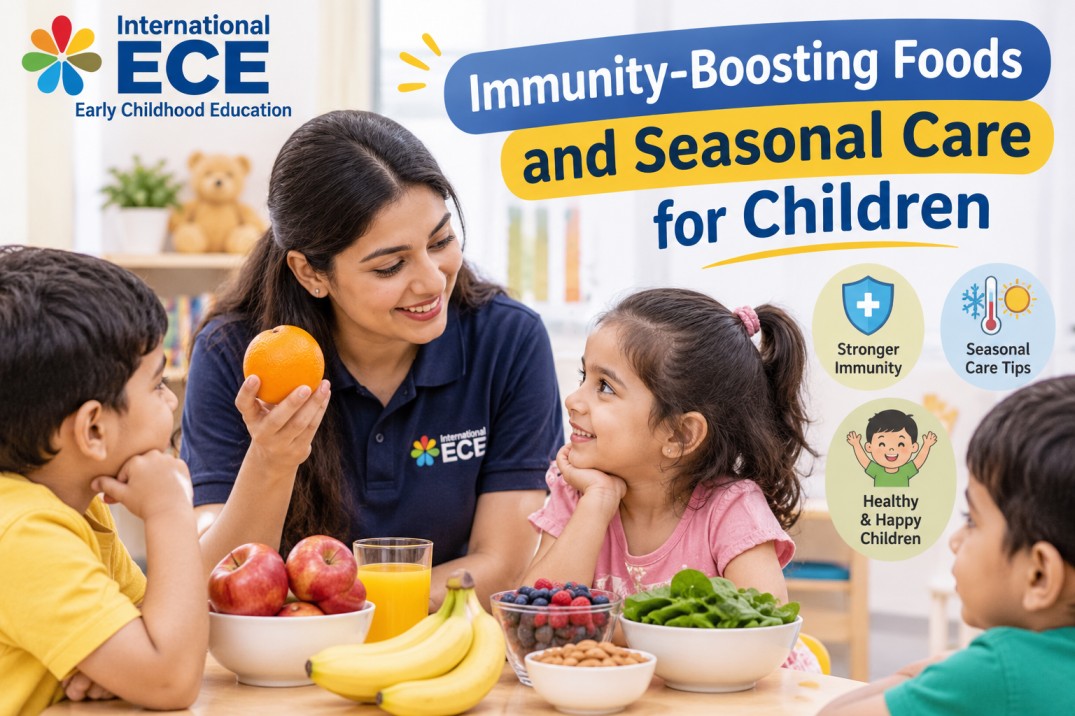
Immunity-Boosting Foods and Seasonal Care for Children During Monsoon and Winter (2027 Guide)
Direct answer: The most effective immunity-boosting foods for Indian children during monsoon and winter are amla, guava, citrus fruits, curd, turmeric, tulsi, ginger, dals, nuts, and seasonal vegetables — combined with adequate sleep, hand hygiene, and vaccination. No single superfood prevents illness. A consistent, varied diet and simple seasonal precautions do.
It is normal for children under five to get six to eight viral infections a year, especially during monsoon and winter. This is not weak immunity. It is a developing immune system learning to fight pathogens. What parents can control is the foundation: what the child eats, how they sleep, and whether basic hygiene and vaccination are in place. This guide gives you the foods, the nutrients, the seasonal differences, and a practical checklist. No fluff.
Why Children Fall Sick More in Monsoon and Winter
Why this matters to you: Understanding why the season matters helps you focus on prevention, not panic.
The Developing Immune System Explained
Children are born with innate immunity, but adaptive immunity — the part that remembers and targets specific germs — develops gradually through exposure, nutrition, and vaccination. This is why young children fall ill more often than adults. Their immune systems are literally under construction.
Approximately 70% of immune cells reside in the gut. Nutrition directly influences how well those cells function. A child who eats a varied, nutrient-dense diet is not “immune” to all infections, but their body is better equipped to fight them and recover faster.
What Indian Paediatricians See Every Season
During monsoon, paediatric OPDs fill with colds, flu, stomach infections, and mosquito-borne illnesses like dengue. During winter, flu and respiratory infections dominate. Children under five are especially vulnerable because their airways are small, their immune memory is limited, and they explore the world hand-first, then face-first.
Key Nutrients That Actually Support Your Child’s Immunity
Why this matters to you: Supplements are not the answer for most healthy children. Food sources are safer, cheaper, and better absorbed.
Vitamin C: The Daily Shield
Vitamin C supports white blood cell production and function. A review by the Cochrane Collaboration found a 13% decrease in cold symptoms in children who took one gram of vitamin C daily for prevention. You do not need a supplement. One fresh amla provides roughly 600 mg of vitamin C per 100g — more than most children need in a day[. Guava, papaya, orange, and capsicum are also excellent Indian sources.
Zinc: The Immune Gatekeeper
Zinc is critical for immune cell development. Even mild deficiency can impair immune responses. Indian food sources include chana dal, rajma, pumpkin seeds, cashews, sesame seeds, and whole wheat. A small handful of pumpkin seeds as an evening snack is one of the easiest zinc fixes for children.
Vitamin D: The Deficiency Most Indian Kids Have
Despite abundant sunlight, vitamin D deficiency is common in Indian children because of indoor lifestyles, school schedules, and pollution. The Indian Academy of Pediatrics recommends 400–600 IU per day depending on age During monsoon, when sunlight is reduced for weeks, levels can drop further. Food sources are limited — egg yolk, fatty fish, fortified milk — so paediatric-guided supplementation is often necessary.
Iron and Omega-3: The Overlooked Foundations
Iron deficiency is extremely common in Indian children and is one of the most frequently missed causes of recurrent infections. Pair iron-rich foods like palak, methi, rajma, and jaggery with a vitamin C source — a squeeze of lemon over dal — to improve absorption. Omega-3 fatty acids, found in walnuts, flaxseeds, and mustard oil, support immune regulation and reduce inflammation.
Top Indian Immunity-Boosting Foods for Children (Monsoon & Winter)
Why this matters to you: These are foods already in your kitchen or available at your local sabzi mandi. No imported “superfoods” required.
Amla, Guava, and Citrus: Vitamin C Powerhouses
Amla (Indian gooseberry) is the richest natural vitamin C source available in India — roughly 20 times the vitamin C of an orange. Give fresh amla juice, amla murabba (without excess sugar), or a teaspoon of amla powder in warm water. Guava, papaya, orange, and mosambi are affordable, seasonal, and child-friendly. One serving daily is enough.
Turmeric, Tulsi, and Ginger: The Indian Kitchen Pharmacy
Turmeric contains curcumin, a well-studied anti-inflammatory compound. Warm turmeric milk (haldi doodh) with a pinch of black pepper at bedtime is evidence-informed, not just grandmother’s advice. Tulsi has documented antiviral and antibacterial properties; 3–5 fresh leaves in warm water with honey can be a daily ritual for children above one year Ginger in dal or sabzi helps with cold and sore throat symptoms. Honey is effective for cough, but never give it to infants under one year due to botulism risk.
Curd, Buttermilk, and Fermented Foods: Gut Health First
One katori of plain homemade curd daily is a genuine immunity investment. Curd provides Lactobacillus bacteria that support gut barrier function. Buttermilk (chaas), idli/dosa batter, and kanji are other accessible fermented foods. Prebiotic fibres from bananas, oats, and garlic feed the beneficial bacteria already in the gut.
Dals, Nuts, and Seeds: Zinc and Protein on a Budget
Chana dal, rajma, moong dal, and whole wheat are affordable zinc and protein sources. Almonds, walnuts, pumpkin seeds, and sesame seeds add vitamin E, zinc, and omega-3s. For non-vegetarian families, eggs and chicken are excellent. A child does not need expensive dry fruits every day — a small handful of seasonal nuts and seeds works.
Monsoon vs Winter: How Care Changes by Season
Why this matters to you: The same child needs different precautions in July versus December. One blanket “boost immunity” tip is not enough.
Monsoon Threats: Water, Mosquitoes, and Gut Infections
Monsoon brings contaminated water, stagnant puddles, and humidity that accelerates bacterial growth. The biggest risks are diarrhoea, typhoid, dengue, malaria, and viral fevers. Give only boiled or filtered water. Avoid street food and raw salads. Use mosquito nets or repellents. Keep nails short and teach handwashing before meals. Warm soups, khichdi, and freshly cooked home food are safer than outside food.
Winter Threats: Flu, Dry Air, and Vitamin D Drop
Winter is flu season. The influenza vaccine is ideally given by end of May before monsoon, but annual flu shots protect through winter as well. Dry air and closed rooms increase respiratory infection spread. Keep rooms ventilated, dress children in layers, and maintain vitamin D intake. Seasonal winter foods — carrots, beetroot, methi, dates, and dry fruit ladoo — are traditionally used and nutritionally sound.
Sample One-Day Immunity Meal Plan for Indian Children
Why this matters to you: A plan makes “boost immunity” actionable. This is a template, not a prescription.
| Meal | What to Serve | Key Nutrient |
|---|---|---|
| Breakfast | Moong dal cheela with mint chutney + 1 small guava | Zinc, Vitamin C, protein |
| Mid-morning | A handful of roasted chana and pumpkin seeds | Zinc, fibre |
| Lunch | Dal + rice + palak sabzi + a squeeze of lemon | Iron, Vitamin C (for absorption), protein |
| Evening snack | One katori homemade curd with banana OR vegetable soup | Probiotics, potassium, hydration |
| Dinner | Khichdi with carrot and beans + warm turmeric milk before bed | Beta-carotene, curcumin, comfort |
Seasonal Care Checklist for Indian Parents
Why this matters to you: Tick these off. A child does not need perfection, but the basics must be in place.
| Checklist Item | Monsoon Focus | Winter Focus |
|---|---|---|
| ☐ Safe drinking water | Boiled or filtered only; no outside water | Warm water; keep hydration up |
| ☐ Hand hygiene | Before meals, after outdoor play, after toilet | Frequent washing during flu season |
| ☐ Seasonal fruits and vegetables | Jamun, pomegranate, guava, gourds | Amla, carrot, beetroot, methi, dates |
| ☐ Probiotic food | Curd or buttermilk daily | Curd if tolerated; warm soups |
| ☐ Mosquito protection | Nets, repellents, no stagnant water | Not the primary concern, but keep rooms ventilated |
| ☐ Vaccination up to date | Routine schedule; flu shot if advised | Annual flu vaccine; check vitamin D status |
| ☐ Sleep | 9–12 hours depending on age | Same |
| ☐ Avoid unnecessary antibiotics | Do not pressure doctors for antibiotics for viral fevers | Same |
Foods and Habits That Weaken Immunity (What to Limit)
Why this matters to you: Adding good foods matters, but removing harmful ones matters just as much.
Excess sugar temporarily suppresses white blood cell function for several hours after consumption Processed and packaged snacks displace nutrient-dense foods and create micronutrient gaps. Fried, spicy, and greasy foods are harder for young children to digest and are best limited during illness. Street food during monsoon is a documented risk for stomach infections. None of these need to be banned forever — but during monsoon and winter, frequency matters.
When to See a Doctor: Red Flags Parents Should Not Ignore
Why this matters to you: “Boosting immunity” is not a substitute for medical care when a child is genuinely unwell.
See a paediatrician if your child has: fever above 102°F that does not respond to paracetamol, breathing difficulty or chest retractions, persistent vomiting or diarrhea with signs of dehydration (sunken eyes, no urine for 6+ hours), extreme lethargy, a rash that does not blanch under pressure, or an illness that lasts longer than expected without improvement. Frequent infections are common, but red flags are not.
Frequently Asked Questions About Child Immunity and Seasonal Care
What are the best immunity-boosting foods for Indian children?
Amla, guava, citrus fruits, curd, turmeric, tulsi, ginger, dals (chana, moong, rajma), nuts, seeds, and seasonal vegetables. No single food is magic — a varied diet with vitamin C, zinc, iron, and probiotics matters more than any one “superfood.”
Is it normal for my child to fall sick every monsoon?
Yes. Children under five can get six to eight viral infections a year, often clustered during monsoon and winter This is a developing immune system at work, not necessarily weak immunity. Focus on recovery, nutrition, and hygiene rather than panic.
Should I give my child vitamin C or zinc supplements?
For most healthy children eating a varied diet, no. Food sources are safer and better absorbed. Supplements may be appropriate if a paediatrician diagnoses a deficiency, but self-prescribing immune supplements is not recommended.
Can turmeric milk really boost immunity?
Turmeric contains curcumin, which has anti-inflammatory and immunomodulatory properties. Warm turmeric milk with black pepper is a reasonable traditional practice, but it is supportive — not a substitute for a balanced diet, sleep, and vaccination.
What should I feed my child during monsoon to prevent stomach infections?
Freshly cooked home food, warm khichdi, soups, boiled or filtered water, curd, and seasonal gourds. Avoid street food, raw salads, and cut fruits from outside. Handwashing before meals is as important as the food itself.
Does the flu vaccine help during monsoon and winter?
Yes. Annual influenza vaccination reduces severe respiratory illness. In India, the ideal timing is before monsoon (by end of May), but the vaccine protects through winter as well. Ask your paediatrician about the schedule for your child’s age.
Final Thoughts: Consistency Beats Superfoods
There is no single food, powder, or supplement that “boosts” immunity overnight. A child’s immune system develops through months and years of adequate nutrition, sleep, movement, hygiene, and vaccination. Amla and turmeric help. Curd and dal help. But what helps most is the daily pattern: a varied plate, clean water, early bedtime, and a parent who knows when to see a doctor.
Use the meal plan as a template, not a rulebook. Use the checklist every season. And remember: a child who gets a cold in July is not a failure of parenting. It is a child whose immune system is learning.