Child Protection Policy for Play Schools: What Every School Must Include
A Child Protection Policy for play schools is a written document that defines how a school prevents, identifies, and responds to any harm to a child — physical, emotional, sexual, or neglect. In India, it must align with the POCSO Act 2012, NCPCR guidelines, and RTE obligations, and be reviewed at least once every 12 months.
If your play school doesn’t have this policy in writing, you’re exposed — legally, reputationally, and ethically.
What Is a Child Protection Policy for Play Schools?
A child protection policy is the school’s official commitment that every child in its care is safe. It covers staff behaviour, parent communication, complaint handling, and legal reporting. It is not a formality — it is the rulebook your team follows when a child’s safety is at stake.
Why this matters to you: Parents today check policies before enrolling. A visible, well-written policy builds instant trust in Tier-1 and Tier-2 cities alike — Mumbai, Indore, Patna, Jaipur.
Why a Child Protection Policy Matters in 2026
Enrolment decisions now depend on trust signals. A 2024 NCPCR report noted that over 60% of child-safety complaints in schools came from unstructured environments with no written safeguarding policy (source: NCPCR Annual Report 2023–24).
Legal Position in India
Play schools fall under the POCSO Act 2012 for any sexual offence, the Juvenile Justice Act 2015 for care standards, and NCPCR guidelines for reporting. Non-compliance can lead to criminal liability for owners and staff.
Reputation and Parent Trust
Parents in cities like Mumbai and Indore now ask for the child protection policy at the admission desk. Having a printed, version-dated policy document visibly increases conversion of enquiries to admissions (industry estimate, 2025).
Why this matters to you: A one-page policy in your admission kit can close more deals than an extra ad spend.
12 Sections Every Play School Child Protection Policy Must Include
Below are the twelve mandatory sections. Each one is short, actionable, and legally defensible.
1. Purpose and Scope
State clearly who the policy protects (children aged 2–6), who it applies to (staff, volunteers, drivers, vendors, visitors), and where (classroom, play area, transport, events).
2. Legal Framework Alignment
Name the laws you align with: POCSO Act 2012, Juvenile Justice Act 2015, RTE Act 2009, and NCPCR guidelines. Add a line stating that the policy will be updated when laws change.
3. Staff Code of Conduct
Cover physical boundaries (no touching below shoulders, no closed doors), language, discipline (no corporal punishment), dress code, and one-on-one time with children.
4. Recruitment and Background Verification
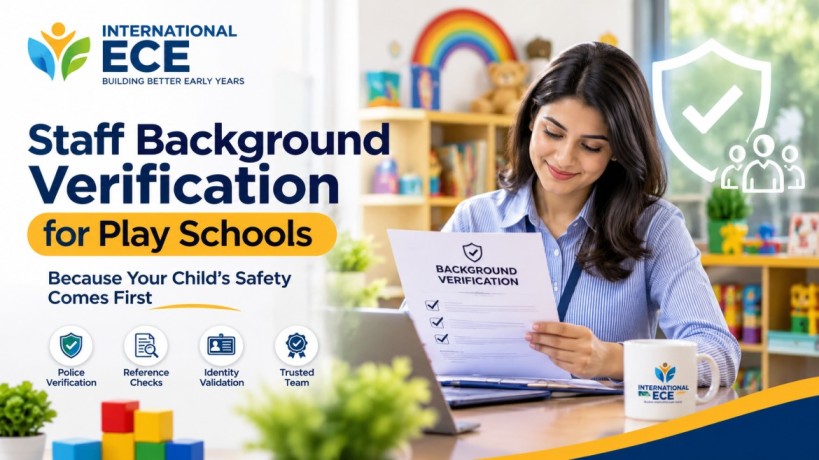
Mandatory police verification, two reference checks, and signed declaration before joining. Include a clause that all verifications are re-run every 3 years.
5. Child-Friendly Complaint Mechanism
Children must have a way to say “no” or report discomfort. Provide a designated Child Safety Officer (CSO) whose name and photo are visible at school entry.
6. Mandatory Reporting Protocol
Any suspected abuse must be reported to the local Childline (1098) or Police within 24 hours. Name a reporting chain: teacher → CSO → Principal → Authority.
7. Parent Communication and Consent
Signed consent for photos, medical care, transport, and outings. Parents receive the policy at admission and sign an acknowledgement copy.
8. Safe Physical Environment
CCTV in classrooms and corridors, no blind spots in play areas, locked electrical points, child-safe washrooms with adult supervision protocols.
9. Digital and Social Media Policy
No personal photos of children on teachers’ phones. School social media photos require written parent consent. Ban private WhatsApp groups between staff and individual parents.
10. Anti-Bullying and Anti-Discrimination
Even for ages 2–6, define what bullying looks like and the response steps. Include a zero-tolerance clause for caste, gender, religion, or disability-based discrimination.
11. Training and Awareness
All staff must complete a child-safeguarding orientation within 30 days of joining and refresher training every 6 months. Maintain attendance records.
12. Review and Audit Cycle
Policy reviewed once a year. Internal audit by the Principal every quarter. Signed review log maintained with date, version, and changes made.
Why this matters to you: These 12 sections form the exact checklist an inspector or a parent will ask about.
Sample Investment: Building Your Policy
| Item | Cost (₹, Estimated) | Time |
|---|---|---|
| Legal drafting (advocate review) | ₹8,000–₹20,000 | 1–2 weeks |
| Police verification per staff | ₹300–₹700 | 7–21 days |
| Staff training workshop (external) | ₹5,000–₹15,000 | 1 day |
| CCTV upgrade (if needed) | ₹15,000–₹60,000 | 2–5 days |
| Printing + display boards | ₹1,500–₹4,000 | 1 day |
| Total (small play school) | ₹30,000–₹1,00,000 | 2–4 weeks |
Child Protection Policy Checklist for School Owners
Print this. Tick every item before opening admissions.
- ✅ Written policy exists, version-dated
- ✅ Legal framework section includes POCSO, JJ Act, RTE
- ✅ Child Safety Officer appointed and named publicly
- ✅ Staff code of conduct signed by every teacher
- ✅ Police verification on file for every staff member
- ✅ Reporting protocol displayed on staff room wall
- ✅ Parent consent forms collected (photos, medical, transport)
- ✅ CCTV working and footage retention ≥ 30 days
- ✅ Childline 1098 number visible at entry
- ✅ Annual training log maintained
- ✅ Policy review date marked in calendar
Common Mistakes Play Schools Make
- Copy-pasting a policy from Google — no local, city-specific contact numbers.
- No signature from staff — a policy without acknowledgement is legally weak.
- Skipping Tier-2 reality checks — a policy meant for Mumbai won’t work for a school in Patna if transport rules are unaddressed.
- Ignoring digital safety — teachers sharing class photos on personal WhatsApp is a red flag.
- No annual review — laws and POCSO amendments change; the policy must too.
Why this matters to you: Any one of these mistakes can turn a routine inspection into a compliance issue.
Frequently Asked Questions (FAQ)
Is a child protection policy mandatory for play schools in India?
Yes. Under NCPCR guidelines and the Juvenile Justice Act 2015, every institution caring for children must have a written safeguarding policy. While states apply it differently, non-compliance is treated as a serious care violation during inspection.
What should be included in a play school child protection policy?
At minimum: staff code of conduct, recruitment verification, complaint mechanism, mandatory reporting protocol, parent consent forms, physical safety standards, digital media rules, and an annual review cycle. Twelve sections are industry standard.
How often should the policy be reviewed?
Once every 12 months, and immediately after any legal amendment — such as changes to the POCSO Act or NCPCR guidelines. An internal audit by the Principal should happen every quarter, with a signed review log.
Who is responsible for child protection in a play school?
The school owner holds primary legal responsibility. Day-to-day responsibility sits with the designated Child Safety Officer (CSO), usually the Principal or a senior teacher, who must be named and displayed at the school entry.
What is the reporting procedure if abuse is suspected?
Report immediately to the Childline helpline (1098) or local police within 24 hours. Then inform parents, document the incident, and cooperate with authorities. Internal chain: teacher → CSO → Principal → external authority.
Can parents demand a copy of the policy?
Yes. Under RTE transparency norms and general consumer expectations, parents enrolling their child have the right to read the policy. Many schools include it in the admission kit as a trust signal.