Daycare Health Policy in India: Sanitisation, Illness Prevention, and Medicine Administration (2027 Guide)
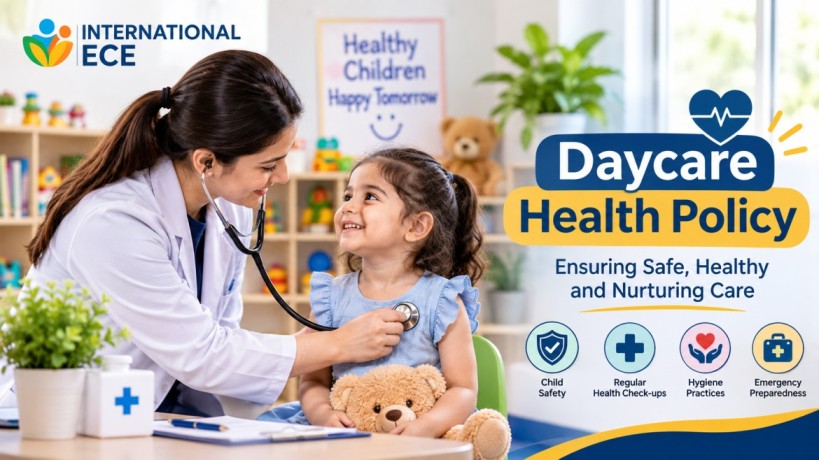
Direct Answer: A daycare health policy in India is a written set of rules covering three areas — how the centre cleans and sanitises, when a sick child must stay home, and how (or whether) medicine is given during care hours. The Ministry of Women and Child Development issued the National Minimum Standards and Protocol for Creches in 2024, and any daycare that cannot show you a written policy on these three areas is a daycare you should not enrol in.
What Does a Daycare Health Policy Cover in India?
A daycare health policy is not a single page. It is three interlocking systems. Sanitisation stops germs from spreading on surfaces and hands. Illness prevention — through exclusion rules and vaccination checks — stops a sick child from infecting the room. Medicine administration controls what happens when a child needs medication during the day, so that no untrained staff member gives the wrong dose to the wrong child.
In India, these three areas are covered under the 2024 National Minimum Standards and Protocol, issued by the Ministry of Women and Child Development (MWCD).
Why this matters to you: As a parent, ask three questions — How do you clean? When do you send a sick child home? Who gives medicine? If the daycare cannot answer clearly and in writing, keep looking.
Daycare Sanitisation Standards in India: What the 2024 National Minimum Standards Require
Sanitisation in an Indian daycare is not about “deep cleaning once a month.” It is about a daily, documented schedule covering floors, toys, nappies, kitchen surfaces, and — most importantly — hands.
Daily, Weekly, and Monthly Cleaning Schedule
| Frequency | What Must Be Cleaned | Who Is Responsible |
|---|---|---|
| Daily | Floors (sweep + mop), nappy-changing table, kitchen counters, dining area, toilets, high-touch surfaces | Crèche helper / cleaning staff |
| Weekly | All toys and play materials, mattresses and durries (washed), bedding, soft furnishings | Crèche worker + helper |
| Monthly | Deep clean of kitchen exhaust, storage areas, outdoor play equipment; pest control check | Supervisor / external vendor |
| Quarterly | Health check-up of all enrolled children by a registered medical practitioner | Visiting doctor / PHC tie-up |
Hand Hygiene: The Single Biggest Predictor of Illness Frequency
Staff must wash hands after every nappy change, before food preparation, after toileting, and after wiping a child’s nose. The 2024 standards require liquid hand wash, clean towels, and child-friendly basins in every crèche.
Why this matters to you: Ask to see the cleaning log. A daycare that tracks daily and weekly cleaning has a system. A daycare that says “we clean every day” without a log is relying on memory.
Illness Prevention in Daycare: Exclusion Policies Every Parent Should Read
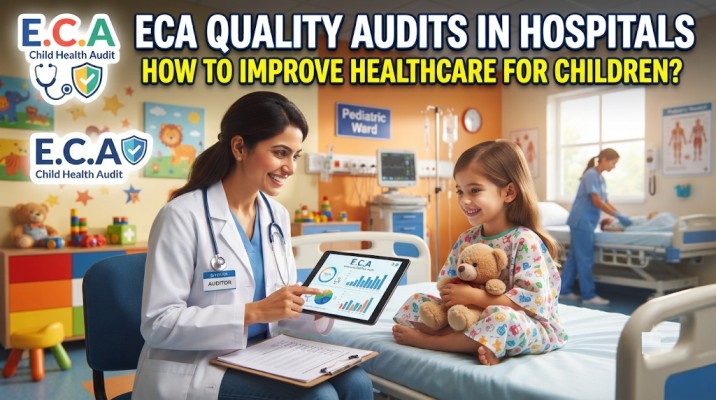
The 2024 MWCD standards require crèches to have clear illness exclusion policies and to maintain immunisation records of all enrolled children.
Fever, Vomiting, and Diarrhoea: When to Keep Your Child Home
| Symptom | Exclusion Period (Standard Indian Daycare Policy) |
|---|---|
| Fever ≥ 100.4°F (38°C) | Stay home until fever-free for 24 hours without fever medicine |
| Vomiting | Stay home until 48 hours after the last episode |
| Diarrhoea | Stay home until 48 hours after the last loose stool |
| Undiagnosed rash | Stay home until a doctor confirms it is not infectious |
| Conjunctivitis (pink eye) with discharge | Stay home until examined and approved by a doctor |
| Hand, foot and mouth disease | Stay home until all blisters have crusted |
| Chickenpox | Stay home until all blisters have crusted |
What Happens When a Child Falls Sick During the Day?
The 2024 standards require a separate, ventilated isolation space where a sick child can be supervised away from other children until a parent arrives. Parents should be called within 15 minutes of a temperature reading above 100.4°F. Every room should have a calibrated digital thermometer and a documented temperature log.
Why this matters to you: The exclusion policy is the first thing you should ask for at a daycare tour. If the policy says “children with fever can attend if parents give paracetamol in the morning,” that is not a policy — it is a warning sign.
Medicine Administration in Indian Daycares: Consent, Storage, and Documentation
Medicine administration is the most regulated and the most variable area of Indian daycare health policy. Some centres instruct teachers not to administer any medication at all; medicine must be handed to a school nurse or doctor. Others permit paracetamol for fever with prior parental consent, and require a pediatrician’s signature before giving any medicine to a child under 2 years of age.
The Parent Consent Form: What It Must Contain
- Child’s full name and date of birth
- Name of medication, dosage, and mode of administration
- Time(s) the medication is to be given
- Reason the child is taking the medication
- Prescribing doctor’s name and signature
- Parent/guardian signature and date
- Duration of authorisation (one form per medication)
Medicines must arrive in their original container with the child’s name, drug name, dosage, and prescribing doctor printed on the label. Every dose should be recorded on a medication log sheet.
Who Can Administer Medicine? Teachers, Nurses, or Nobody?
The safest Indian daycares separate teaching from medicating. In centres without a full-time nurse, the crèche supervisor is typically the designated medication administrator, and the helper is not authorised.
Why this matters to you: Ask the daycare — “If my child needs an antibiotic at 2 pm, who actually puts it in their mouth?” If the answer is “the teacher,” ask to see the teacher’s medication training record.
Daycare Health Policy Checklist: What to Ask Before You Enrol
The 10-Point Health and Hygiene Audit for Indian Daycares
- ☐ 1. Written sick-child policy — a document that lists exactly which symptoms require a child to stay home
- ☐ 2. Immunisation records required at admission and checked every quarter
- ☐ 3. Separate isolation space for a sick child awaiting pickup
- ☐ 4. Calibrated thermometer in every room, with a temperature log
- ☐ 5. Daily and weekly cleaning log with signatures
- ☐ 6. FSSAI-registered kitchen (if food is provided), with allergen flagging
- ☐ 7. Medication consent form requiring the prescribing doctor’s signature
- ☐ 8. Medication log recording every dose, time, and staff signature
- ☐ 9. Staff medical certificates and police verification
- ☐ 10. Written tie-up with a nearby health facility for emergencies
Why this matters to you: A daycare that scores “Yes” on 8 out of 10 is not perfect. But a daycare that cannot show you a written sick-child policy or a medication consent form is telling you, in advance, what will happen when your child gets sick there.
Government Rules and National Standards: What Daycare Operators Must Comply With in 2027
The 2024 National Minimum Standards and Protocol for Creches
| Requirement | What the 2024 Standards Say |
|---|---|
| First aid and medical kit | Must be stored on premises; fire extinguisher required |
| Health facility tie-up | Must have an arrangement with the nearest health care facility |
| Health check-ups | All enrolled children examined by a registered medical practitioner at least once per quarter |
| CCTV | Recommended to ensure supervision; emergency numbers on display |
| Staff ratios | 1 crèche supervisor + 1 helper for 20–25 children; only women as caregivers |
| Staff health | Medical fitness certificate, police verification, character certificate before hiring |
| Child health records | Admission details, attendance, medical records, visitor logs, inspection reports |
Staff Health Requirements and Police Verification
The Code on Social Security, 2020 (effective 21 November 2025) subsumed the Maternity Benefit Act, 1961, and Section 67 requires establishments with 50 or more employees to provide crèche facilities.
Why this matters to you (operator): If you run a daycare in a Tier-2 city like Indore or Patna, you may not face daily inspections. But when a parent asks “Are you compliant with the 2024 national standards?”, the operator who can say “Yes, and here is our policy” wins the admission.
Why This Matters to You: The Parent and the Operator
For Parents: Health Policy Is Your First Filter
Children in daycare commonly get six to eight colds or more per year, with more in the first year. A good health policy does not stop all illness — it stops preventable illness.
For Operators: Compliance Is Your Licence to Operate
A daycare that can show a cleaning log, an isolation space, and a medication consent form can charge a premium and retain families. The cost of a first-aid kit and a thermometer is trivial. The cost of an outbreak is not.
Frequently Asked Questions
1. What is the standard fever rule for daycare in India?
Most Indian daycares follow a 100.4°F (38°C) threshold. A child with a fever must stay home until they are fever-free for 24 hours without fever-reducing medicine. Daycares that allow a child to attend with a “masked fever” increase the risk of spreading infection to the entire group.
2. Can daycare staff give my child medicine in India?
Only if the daycare has a written Authorization to Administer Medication form signed by you, and for children under 2, a pediatrician’s signature. Many Indian schools prohibit teachers from giving medicine entirely; only a school nurse or doctor may administer it. Always ask who will actually give the dose.
3. How often should daycare toys and mattresses be cleaned?
Toys and play materials should be sanitised weekly, and mattresses and durries washed weekly. Floors and high-touch surfaces should be cleaned daily, and a written cleaning log should be maintained as per the 2024 national crèche standards.
4. What illnesses require a child to stay home from daycare?
Exclusion criteria include fever above 100.4°F, vomiting or diarrhoea within the last 24 to 48 hours, an undiagnosed rash, conjunctivitis with discharge, hand-foot-and-mouth disease until blisters crust, and chickenpox until all lesions have dried.
5. Is a daycare required to have a first-aid kit and a doctor tie-up in India?
Yes. The 2024 National Minimum Standards for Crèches require every centre to store first-aid kits, medical kits, and fire extinguishers, and to have a written arrangement with the nearest health care facility for emergencies.
6. What immunisation records does a daycare need before admission?
The 2024 standards require crèches to maintain immunisation records of all enrolled children. AIIMS crèche SOPs require written proof of immunisation within 60 days of attendance, and non-immunised children may be excluded during an outbreak.