
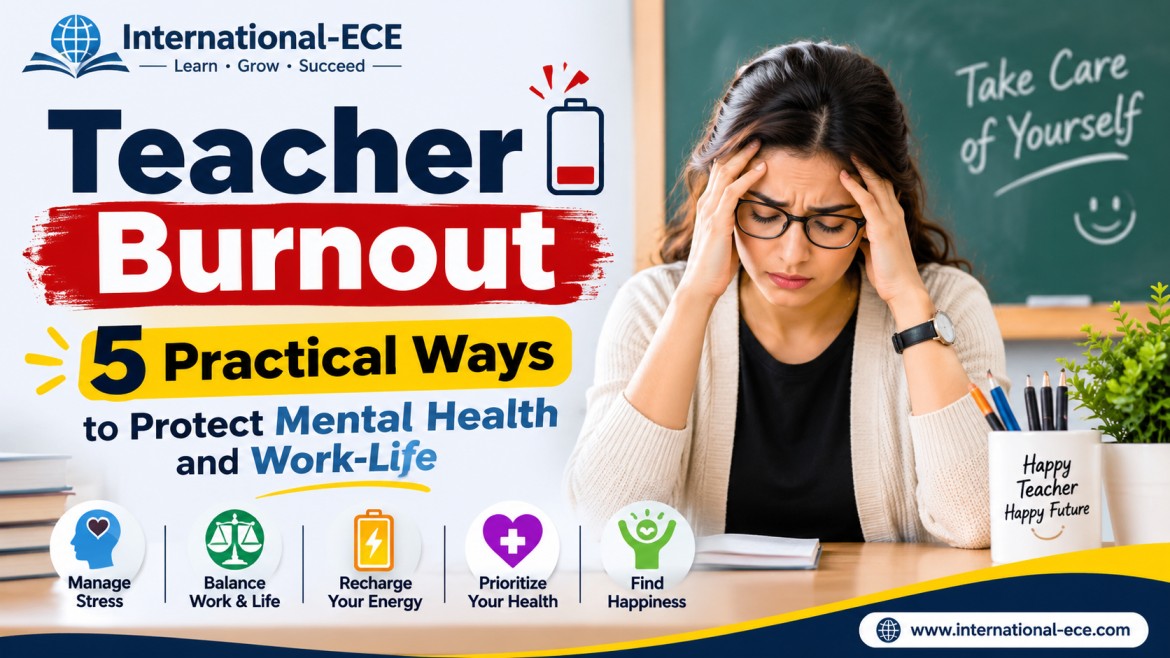
Teacher Burnout: 5 Practical Ways to Protect Mental Health and Work-Life Balance (2027)
Teaching is one of the most rewarding professions, but it is also one of the most demanding. For early childhood educators, the daily responsibility of nurturing young minds—while managing classroom dynamics, administrative tasks, and parental expectations—can quickly lead to teacher burnout. As we move into 2027, the conversation around educator well-being is more critical than ever. Burnout is not a sign of weakness; it is a systemic challenge that requires intentional, practical strategies to overcome.
Whether you are a preschool teacher, an Anganwadi worker, or a school leader, protecting your mental health is not a luxury—it is a professional necessity. Below are five practical, actionable ways to safeguard your well-being and maintain a healthy work-life balance in the year ahead.
1. Set Firm Boundaries and Protect Your Time
One of the most effective ways to combat burnout is to establish clear boundaries between your professional and personal life. Without boundaries, work can easily bleed into evenings, weekends, and even vacations, leaving you with no time to recharge
Practical Tips for Boundary-Setting
- Define your workday: Decide when your teaching day officially ends and stick to it. Avoid grading papers or answering emails late into the night.
- Mute notifications: After hours, mute work-related notifications on your phone. Resist the urge to check school messages during family time.
- Create a “transition ritual”: Develop a small routine that signals the end of the workday—such as a short walk, a cup of tea, or changing out of your work clothes—to help your brain switch off.
Remember: Boundaries are not barriers. They are tools that help you achieve balance and show up as your best self for your students.
2. Build a Personalized Self-Care Toolkit
Self-care does not require a spa day or a expensive retreat. It is about identifying small, consistent actions that recharge your energy and soothe your nervous system. As the saying goes, “You cannot pour from an empty cup.”
Simple Self-Care Practices for Busy Educators
- Morning grounding: Start your day with a 5-minute mindfulness practice, such as deep breathing or journaling, before checking your phone.
- Micro-breaks: Throughout the day, take 60-second pauses to stretch, breathe deeply, or simply close your eyes. These small moments can prevent stress from accumulating.
- Physical movement: A short walk, gentle stretching, or even dancing to your favorite song can release tension and boost mood.
- Digital detox: Set aside at least 30 minutes each evening without screens to read, cook, or connect with loved ones.
3. Seek Out and Lean on Your Support Network
No teacher is an island. Isolation amplifies stress, while connection fosters resilience. Building a strong support network—both inside and outside of school—is a proven buffer against burnout.
How to Build Your Support System
- Connect with colleagues: Reconnect with supportive co-workers who understand your challenges. A brief chat during lunch can be a powerful stress reliever.
- Find a mentor: If you are new to the profession, seek out an experienced educator who can offer guidance and perspective.
- Join professional communities: Organizations like the International Early Childhood Education Association provide platforms to connect with peers, share resources, and access training programs.
- Seek professional help when needed: If stress becomes overwhelming, do not hesitate to consult a counselor or mental health professional. This is a sign of strength, not weakness.
4. Practice Mindfulness and Stay Present
Mindfulness is not about emptying your mind; it is about noticing the present moment and responding with intention rather than reaction. For teachers, mindfulness can be a powerful tool to manage classroom stress and protect your own emotional well-being.
Easy Mindfulness Techniques for the Classroom
- Three deep breaths: Before each class or transition, pause and take three slow, deep breaths. This simple act can regulate your nervous system and help you feel centered.r
- Gratitude journal: Keep a small notebook on your desk and jot down one thing you are grateful for each day. This shifts your focus toward the positive.
- Body scan: During a quiet moment, mentally scan your body from head to toe, noticing areas of tension and consciously relaxing them.
- Mindful listening: When a student speaks to you, practice fully listening without planning your response. This improves communication and reduces misunderstandings.
5. Organize Your Space and Systems to Reduce Mental Clutter
Physical clutter and chaotic systems increase anxiety and cognitive overload. When your environment is organized, you can focus more energy on what truly matters: teaching and connecting with your students.
Practical Organization Strategies
- Declutter your workspace: Spend 15 minutes at the end of each day tidying your desk. A clean space promotes a clear mind.
- Use digital tools: Utilize checklists, calendars, or apps to track tasks like grading, lesson planning, and parent communication. Automation can save hours of mental energy.
- Batch similar tasks: Group similar activities together—such as grading all worksheets at once—to reduce mental switching costs.
- Prepare the night before: Set out materials and write a brief to-do list for the next day. This reduces morning stress and sets a calm tone for the day.
Frequently Asked Questions (FAQs): Teacher Burnout and Mental Health in 2027
1. What is teacher burnout, and how do I know if I have it?
Teacher burnout is a state of physical, emotional, and mental exhaustion caused by prolonged work-related stress. Common signs include constant fatigue, feeling overwhelmed, detachment from students, reduced job satisfaction, irritability, sleep problems, and a sense of ineffectiveness. If these symptoms persist for weeks and affect your daily life, it may be a sign of burnout.
2. How can teachers protect their mental health in 2027?
Teachers can protect their mental health in 2027 by setting clear work boundaries, taking regular micro-breaks, practicing mindfulness, maintaining a strong support network, and seeking professional help when needed. Small, consistent habits—such as a morning routine, digital detox, and healthy sleep schedule—can make a significant difference.
3. What are the best ways to maintain a healthy work-life balance as a teacher?
To maintain work-life balance, define fixed work hours, avoid checking work messages after school, prepare lessons in advance, and schedule personal time for hobbies, family, and rest. Saying “no” to unnecessary commitments and delegating tasks where possible can also help reduce overload.
4. Can schools and institutions help prevent teacher burnout?
Yes. Schools and early childhood institutions can help by promoting realistic workloads, offering mental health support, encouraging open communication, providing professional development on stress management, and creating a positive, collaborative work culture. Supportive leadership plays a key role in reducing burnout.
5. How can early childhood educators manage classroom stress effectively?
Early childhood educators can manage classroom stress by using simple mindfulness techniques, such as three deep breaths before transitions, maintaining structured routines, organizing teaching materials in advance, and involving children in simple classroom responsibilities. Taking short breaks and seeking support from co-teachers also helps.
6. When should a teacher seek professional help for burnout?
A teacher should seek professional help if stress, anxiety, or exhaustion begins to affect sleep, appetite, relationships, or daily functioning. Persistent feelings of hopelessness, frequent illness, or inability to cope are clear signals to consult a counselor or mental health professional. Seeking help is a sign of strength, not weakness.
Apply Now